

Dear Gentle Reader,
It used to be said that medical textbooks were an average of 17 years behind medical innovations and discoveries. Science has sped up since then. Any clinician using their degree textbooks as a staple reference is liable to make errors of judgement, hence the need for regular CME sessions. However, only some countries make CME attendance essential for a clinician to keep their registration/certification; which, considering the speed of medical progress, seems to be an error of judgement on the part of those who don’t.
It's a rare occurrence when innovative medicine doesn’t outstrip guidelines; it’s only the “me-too” drug launches that do so in a guideline-restricted environment. Although of course, guidelines are often specific to a country, unless formulated by an international consensus agreement.
Below, Beth takes a look at how all the gaps between clinical evidence, clinical practice, national reimbursement, national and international guidelines relate; and how we can, in part, fix them. As I write, Rx is helping to publish yet another consensus statement, which is generally the first step in producing new guidelines. I am optimistic about the future when so many dedicated opinion leaders give their time to reduce the gaps, supported by independent grants from our clients that help publish and ratify them. It’s great to be part of the process.
Ruth
Medicine has always been quite good at moving the goalposts. Just when we think we have established the rules of engagement, along comes a new therapy, a promising clinical trial or a reimbursement decision that changes the playing field.
But what happens when the evidence moves forward and the guidelines have yet to catch up? A treatment may be available, even funded, but that doesn't necessarily mean it has found its place in clinical practice.
This month, we're looking at the gap between scientific progress and everyday care, and how medical communications can help bridge it.
The gap between evidence and practice

New therapies emerge, clinical trials deliver promising results and reimbursement decisions make treatments more accessible. However, translating these into routine clinical practice is not always straightforward.
Clinical guidelines take time to update; the evidence must be reviewed, and its quality and implications carefully considered. Meanwhile, regulatory approvals, funding decisions and local treatment pathways may all be moving at different speeds.
The result? A treatment can be approved and funded before it has found a clear place in existing clinical recommendations.
For healthcare professionals, this raises questions such as which patients might benefit? or how does the treatment compare with existing options? or where does it fit within established care pathways?
We are left with a gap between what is possible, what is recommended and what is actually happening in clinical practice.
That gap is not necessarily a sign of resistance to innovation. Responsible clinical decisions take time, evidence and careful judgement. But they also depend on healthcare professionals having the information they need to know about new developments.
When reimbursement outpaces guidelines

A reimbursement decision is a major step towards improving patient access. But reimbursement bodies, guideline committees and healthcare organisations operate on different timelines. A treatment may become funded while guidelines are still under review and hospitals are working out how to introduce it.
There's also an important distinction between reimbursement eligibility and clinical appropriateness. Just because a treatment is funded doesn't automatically make it the preferred option for every eligible patient. Clinicians still need to understand the evidence, identify suitable patients and consider how a new therapy fits alongside existing treatments.
Prescribers may need additional education, multidisciplinary teams may need to agree on new approaches, and hospitals may need to update protocols or monitoring procedures.
Essentially, what I’m saying is that while removing the financial barrier is essential for improving patient care, there are many other equally important barriers to consider. When treatments become accessible before guidelines have caught up, healthcare professionals need clear, relevant information to navigate the uncertainty.
The role of medical communications
This, my friends, is where medical communications comes in.
Our role is to help healthcare professionals understand what the evidence tells us, what it doesn't and how it relates to the decisions they make. That means going beyond the headline results.
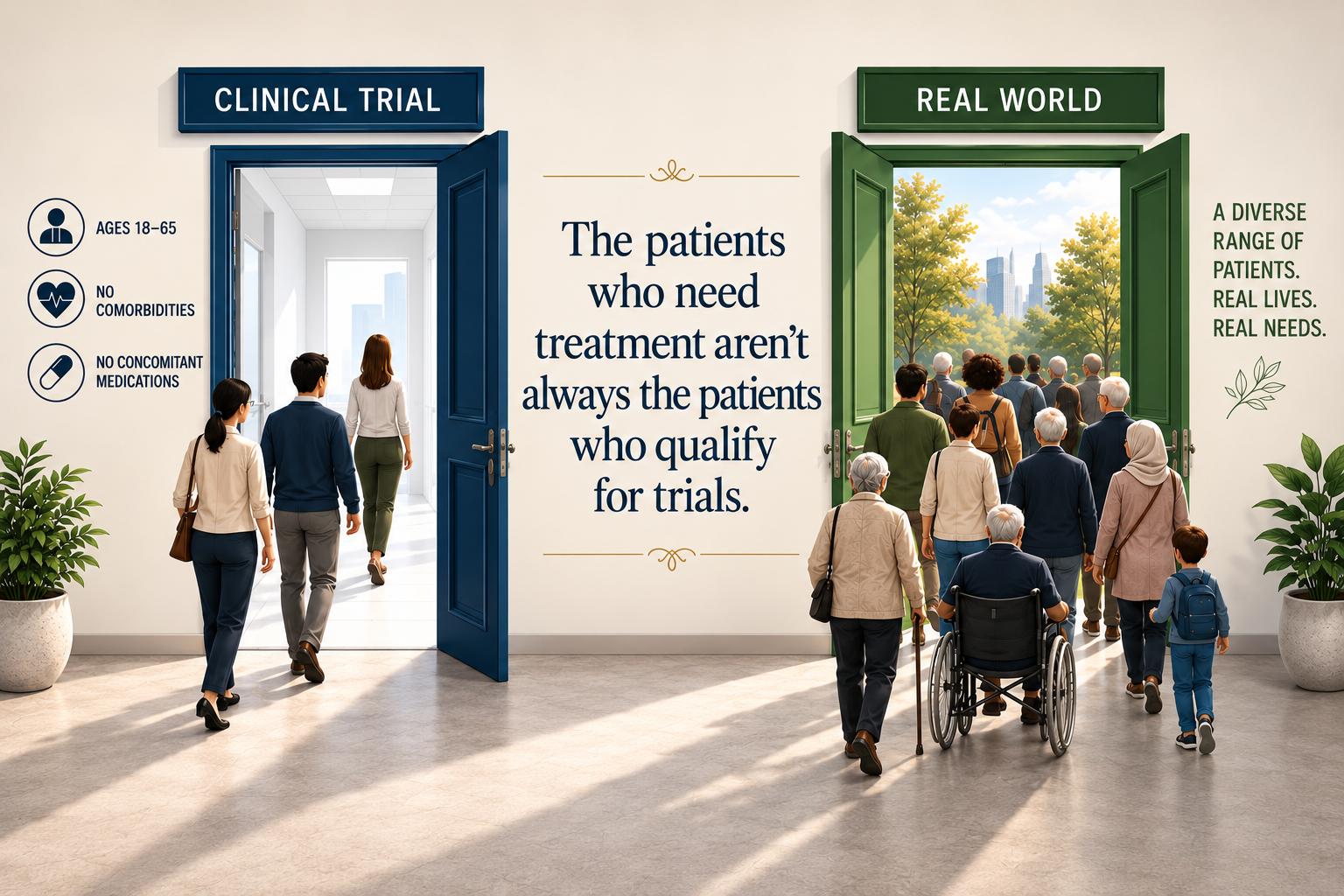
A statistically significant finding, for example, isn't necessarily a clinically meaningful one. Healthcare professionals need to understand the size of the benefit, the patients studied, the limitations of the research and how the findings compare with existing evidence.
It also means being comfortable communicating uncertainty. Emerging evidence typically doesn’t answer every question, and there's considerable value in being clear about what remains unknown.
When guidelines and treatment availability aren't fully aligned, medical communications can help address practical questions too. Evidence summaries, educational resources, publications and scientific discussions can clarify treatment pathways, reimbursement criteria and clinical considerations.
Importantly, we must distinguish between emerging evidence, approved indications, funding decisions and formal clinical recommendations. They are not interchangeable.
And because introducing new treatments often involves entire multidisciplinary healthcare teams, supporting balanced scientific exchange across different disciplines is equally important.
Closing thoughts
Medicine will continue to evolve, and the systems governing clinical practice won't always keep pace; nor, necessarily, should they. Guidelines exist for good reason.
But when evidence, access and recommendations move at different speeds, clear and balanced scientific communication becomes particularly valuable.
Medical communications can't eliminate the gap between innovation and implementation. It can, however, help ensure that the gap isn't made wider by confusion or incomplete information.
Rx Updates:

- 26 years of Rx! This month, 13 November, marked Rx's 26th anniversary. More than a quarter of a century of medical communications, and plenty to celebrate as we look ahead to what's next.
- Our team is growing! We've recently welcomed six new team members, with another joining us in the New Year. And we're not stopping there, with further recruitment planned over at least the next three months.
- Expanding our freelance network: Alongside our growing in-house team, we're building a network of highly experienced freelance Project Managers to complement our established team of Freelance Writers. This is to ensure our clients continue with experienced support as we train up our high-potential beginners.
- New faces, familiar faces: Our newest recruits are beginning to rival our longer-serving colleagues in number. But don't be fooled into thinking we've had a changing of the guard. Many of our established team members have been with Rx for well over a decade.
- A fresh look for the Rx office: We're giving our workspace a major makeover, complete with new desks, chairs, wall panels and a fresh coat of paint. The refurbishment will take place in two phases and create more opportunities for our Editorial and Project Management teams to work closely together. Only the carpets have escaped the renovation plans..
- New ways of working: It's not just the office that's changing. We're also introducing significant improvements to how we record project information and manage timesheets, helping our growing team work more effectively and also provide our clients with added information - not that they have ever requested it, but still..
- A record number of projects! All this change comes at an exciting time, with a record number of new projects coming through our doors. Between the expanding team, office transformation and growing workload, there's certainly no shortage of activity at Rx!
We'll deliver straight to your inbox
Spotlight on the blog: When does new evidence actually change practice?

We hear the term practice-changing a lot when exciting clinical trial results are announced. But does a positive trial really mean better outcomes for patients? What happens when the evidence looks promising, but clinical practice hasn't caught up?
In our latest blog, we explore what makes evidence genuinely practice-changing, from statistical versus clinical significance and real-world applicability to the role medical communications plays in helping turn new findings into informed clinical decisions.